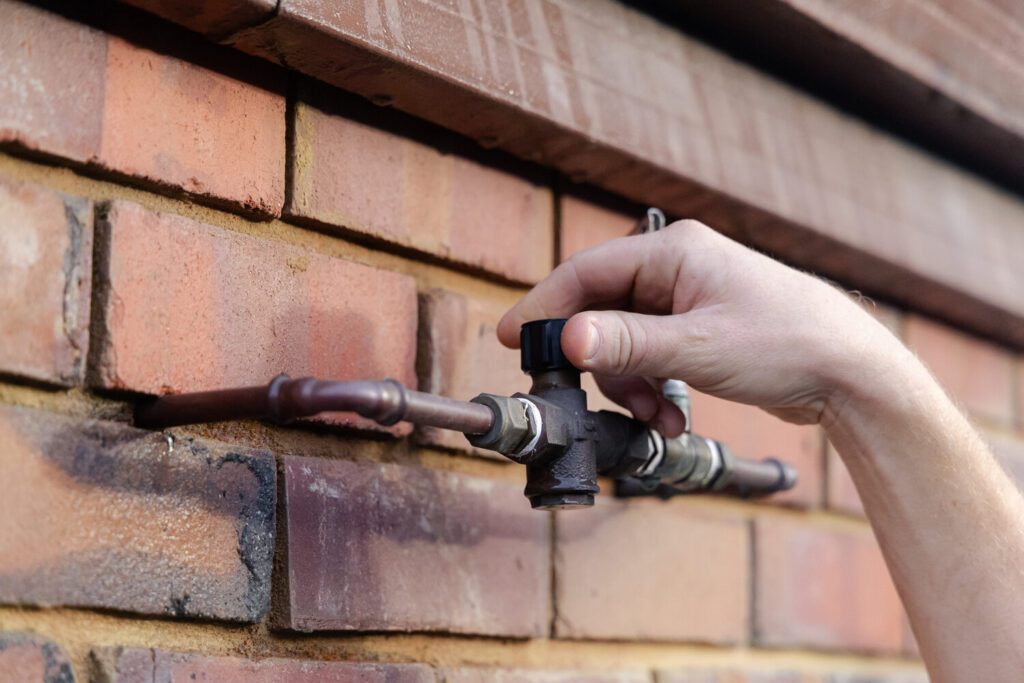
What goes wrong with the run
The soakwell gets the attention, but a good share of drainage faults are in the pipe between it and the roof.
Cracks
Old pipe, ground movement, or something heavy over a shallow section. Water escapes at the crack into the surrounding ground instead of travelling on to the well.
Joints that have dropped or pulled apart
Very common on older systems where the ground has settled. Both lengths of pipe are perfectly sound; the connection between them is not. Water leaves at the gap, and sand enters through it.
Loss of fall
A run needs to slope consistently toward the well. When a section settles, water slows there — and wherever water slows, sand drops out of it and stays. That spot silts up every year regardless of how many times it is cleared.
Root intrusion
Roots find a crack or an open joint, then thicken inside the pipe. They catch every bit of debris going past, which turns a small defect into a complete blockage over a couple of seasons.
Crushed sections
Shallow pipe under a driveway or a parking area, flattened by load it was never meant to carry.
How the fault gets found
The point of doing this properly is to reduce a whole property to one small, specific area before anyone picks up a shovel.
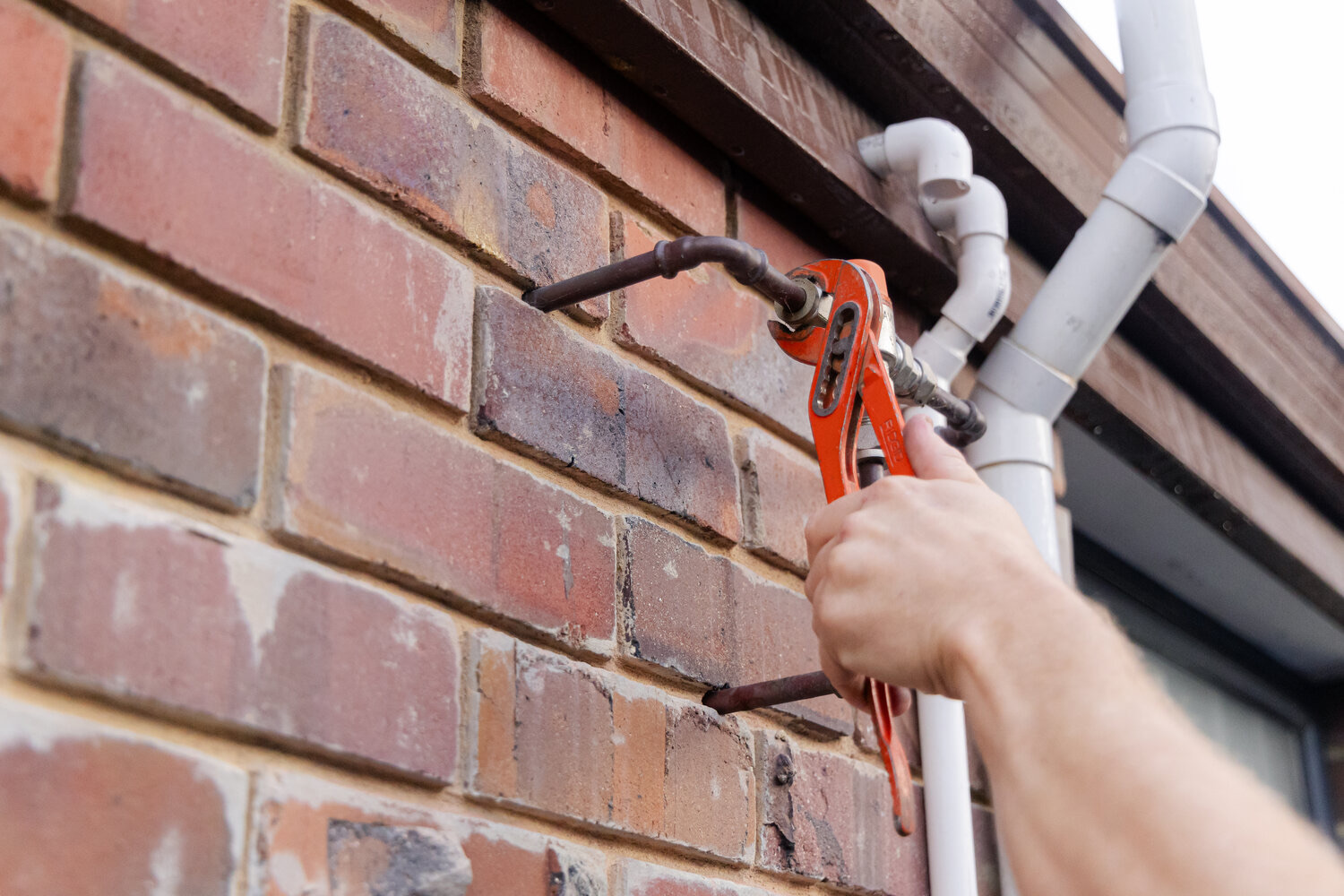
A drain camera goes into the run and we watch what is down there — where the defect is, how far along, what kind it is, and what condition the pipe either side is in. That last part decides whether repairing one section is sensible or whether the run has more wrong with it than the bit that is currently causing trouble.
Where the line is not accessible to a camera, we work it out from the known points at either end and narrow it down by how the system behaves. Older Como properties frequently have runs nobody has any record of — pipework added during a 1970s extension, a patio drain connected to something long since abandoned, a well capped off and forgotten during a subdivision. Establishing what is actually live is genuinely part of the job. Leak detection
Once the failed section is identified, the excavation is a small hole in a known spot rather than a series of hopeful trenches through your lawn.
You get a written price for the repair once we know what is being repaired. Transparent pricing, no hidden costs.
The clue you already have
Two questions tell us a surprising amount before we arrive.
Does the wet patch only appear after rain? If yes, it is a stormwater fault — a break letting water out of the drainage run. If the ground stays wet regardless of the weather, that is a pressurised line rather than a drainage one, and it is a different job entirely.
Has this drain blocked before? A run that blocks repeatedly is not unlucky. Sand does not accumulate that fast in a sound, well-graded pipe. Repeat blockages almost always mean a section has lost its fall, or a break is letting sand in from outside, or roots are established. Blocked stormwater drains
Why Como runs give trouble
The drainage here is old. Como was subdivided in 1905 and built out mainly through the 1950s and 1960s, so plenty of these runs have been underground for well over half a century — long enough for joints to settle, for ground to move around them and for roots to find every small defect.
The bigger factor is what has been built since. Only about a third of Como's occupied dwellings are now separate houses, with semi-detached homes, townhouses and villas making up more than half. Subdivision does two things to a stormwater run at once: it pushes more water through pipe that was sized for less, and it frequently puts driveways, parking and paving over shallow sections that used to sit under a lawn.
More water through it, more weight on it, and another few decades on the clock. More on Como drainage
Repairing a section, or replacing the run
We would rather do the smaller job, and often the smaller job genuinely is the right one. A single cracked length replaced, a joint remade, a crushed section cut out and renewed — these hold up perfectly well when the rest of the run is sound.
Replacing a longer stretch is the honest answer when the camera shows the same defects repeating along its length, when the fall is wrong over a whole section rather than at one point, or when roots have gone through it in several places. Repairing one metre of a run that has five more metres in the same condition means paying for the same visit again next winter.
And sometimes the pipe is fine and the problem is at the far end — a soakwell that has silted up or collapsed, backing the whole run up. Which is why we look at the system rather than just the symptom. Collapsed soakwell repair
Book a look
Tell us where the water shows up, whether it only happens after rain, and whether this drain has given trouble before.
A licensed plumber comes out at no charge and leaves you with a written price. Monday to Friday, 7:00am to 4:00pm.