The problem with buried pipe
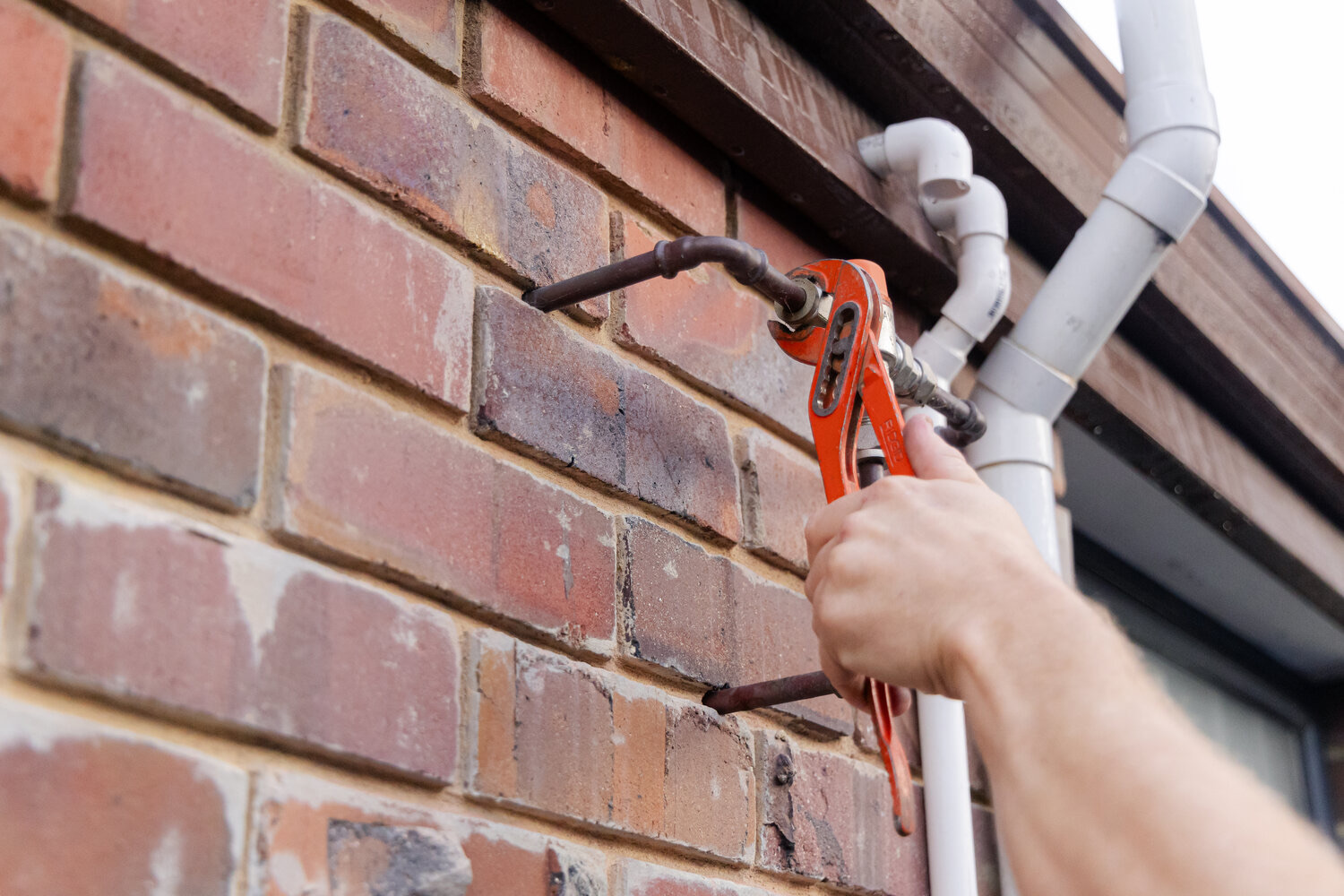
Everything underground gives you the same unhelpful clue: water appears somewhere, and it is almost never directly above the break.
Water follows the path of least resistance once it leaves a pipe. It travels along the trench line, along the outside of the pipe itself, down a slope, or sideways under paving until it reaches somewhere it can surface. By the time you see it, it can be metres from where it actually escaped.
Which is why digging where the water shows up is such a reliable way to waste a day and ruin a lawn for nothing.
What we look for
On stormwater and drainage work, leak detection is usually about finding one of these.
A cracked or broken stormwater line
The run between a downpipe and a soakwell has failed somewhere along its length, and water is discharging into the ground at the break instead of reaching the well. The yard stays wet near the break and the soakwell sits half empty. Stormwater drain repairs
A joint that has pulled apart
Very common on older systems where the ground has moved, or where something heavy has been driven over a shallow run. The pipe is intact either side; the connection between the two is not.
A failed soakwell
A cracked or collapsed chamber leaks water out sideways at shallow depth rather than letting it soak away properly below. That produces a persistent soft patch directly over the well. Collapsed soakwell repair
A supply line leak
Water escaping from a pressurised line rather than a drainage one. This behaves differently — it is constant rather than only after rain — and that difference is often the first thing that tells us which system we are dealing with.
The timing is the biggest clue of all. A wet patch that only appears after rain is a drainage fault. One that never dries out regardless of the weather is a pressurised line. We ask about that on the phone because it changes what we bring.
Finding it without wrecking the yard
The point of detection work is to reduce a whole property to a small, specific area before anyone picks up a shovel.
That means working out what pipe is actually there and where it runs, following the system from the known points at either end, and narrowing down the section that is not behaving the way the rest of it does. Old Como properties frequently have runs nobody has a record of — pipework added during a 1970s extension, a patio drain connected to something long since disconnected, a well capped off and forgotten during a subdivision.
Once the area is identified, the excavation is a small hole in a known spot rather than a series of hopeful trenches. That is the whole value of doing detection first.
You get a written price for the repair once we know what we are repairing. Transparent pricing, no hidden costs.
Why Como properties are harder than most
Three things, all of them local.
Age
Como was subdivided in 1905 and largely built out through the 1950s and 1960s. Drainage from that era has been altered, extended and partly abandoned over decades, often with no drawings to show for it.
Subdivision
Only about a third of Como's occupied dwellings are separate houses. Every time a block has been split, drainage has been re-routed, capped, shared or left in place under a new structure. Finding what is live and what is abandoned is half the job.
Ground and water
Como sits between the Swan River to the north and the Canning River to the south. On the lower ground closer to either foreshore, the natural water table is higher and the sand holds moisture longer, so a damp patch means less on its own and detection matters more.
What we do not ask you to do
We will not send you out to dig a test hole, run a hose, watch a meter or map your own pipework. That is the job you are paying for.
All we need on the phone is where the water shows up, whether it only happens after rain, and roughly when you first noticed it. Everything after that is ours.
After we find it
Finding it and fixing it are two parts of the same visit wherever we can manage it.
Some repairs are straightforward — a broken section replaced, a joint remade, a well repaired. Others turn out to be a symptom of a system that is simply past its life or was never sized properly, in which case we will tell you that plainly rather than patch it and let you find out next winter. Soakwell replacement · Backyard flooding and drainage
Book a leak detection visit
Tell us what you are seeing and we will call you back to arrange a time. A licensed plumber comes out at no charge. Monday to Friday, 7:00am to 4:00pm.